
A tree removal leaves you with a flush-cut stump, and what happens to it next is a separate decision most people haven't thought through until they're standing there looking at it. The two options — grinding and full removal — solve different problems, and picking the more expensive one when you didn't need it is a common way to overspend on an otherwise straightforward job.
What each one actually does
Stump grinding
A specialized grinder mills the stump and its major surface roots down eight to twelve inches below grade, leaving a bed of wood chips and a slight depression that settles over time. The deeper root system stays in the ground and decomposes naturally over the following years. This is faster, cheaper, and less disruptive to surrounding lawn and hardscape.
Stump removal
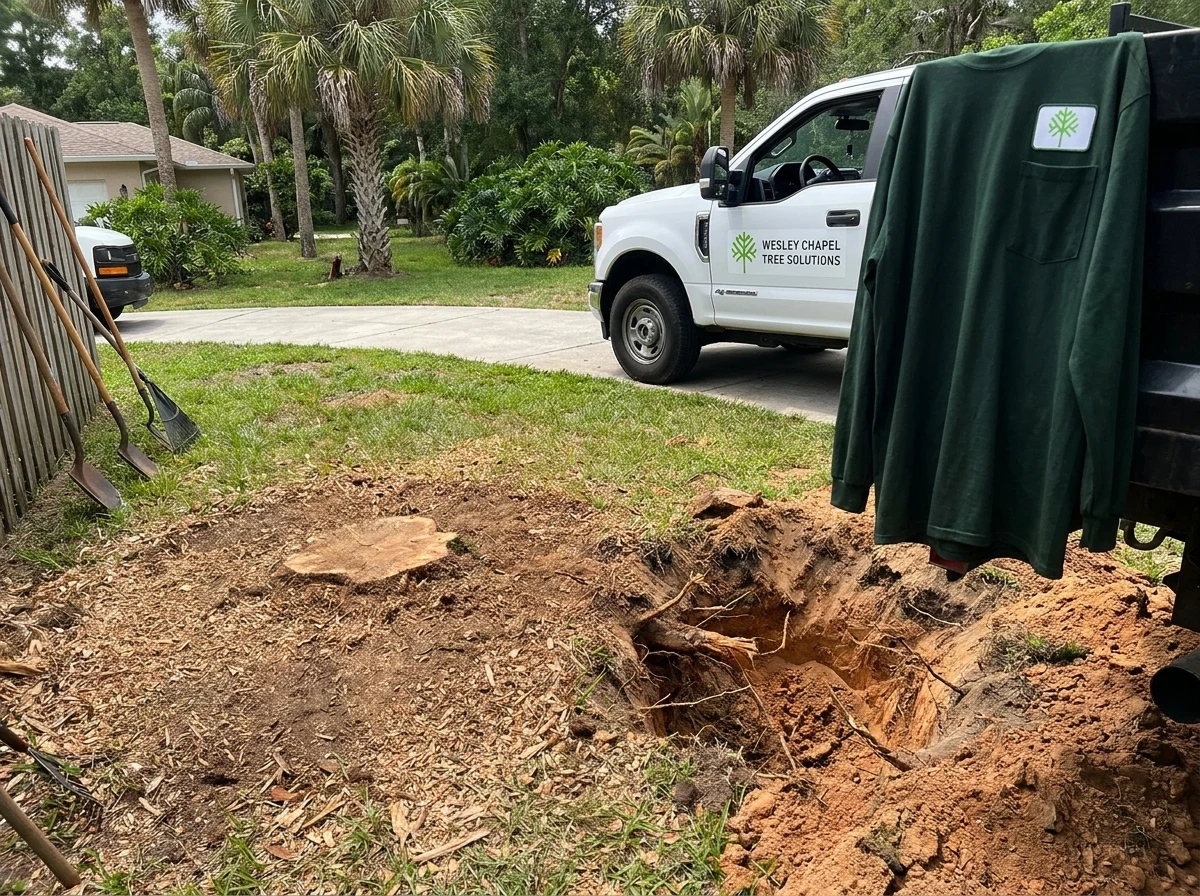
Full removal physically extracts the entire stump and root ball, typically with an excavator, then backfills the resulting hole. It's more expensive, more disruptive to the surrounding area, and takes longer — but it's the only option that removes essentially all of the root mass rather than leaving it to decompose.
| Item | Detail |
|---|---|
| Stump grinding, small | $75 – $150 |
| Stump grinding, medium | $150 – $300 |
| Stump grinding, large | $250 – $400 |
| Full stump removal | Typically $400 – $1,200+, size dependent |
When grinding is the right call
For the large majority of homeowners, yes. Grinding clears enough of the stump and surface roots that you can replant, resod, or simply stop mowing around it within weeks. It's the default recommendation unless you have a specific reason that requires full removal — see below.
When full removal makes more sense
- Planting a new tree in the exact same spot. Old root mass, even decomposing, can occasionally interfere with a new tree's root establishment in the identical location.
- Roots interfering with a foundation, driveway, or utility line. If the root system itself — not just the stump — is the problem, grinding the visible stump doesn't address the underlying structural issue.
- Preparing ground for a structure or pool. New construction directly over a former stump location generally needs the root mass fully cleared, not just ground down, to avoid future settling.
- A stump that keeps sending up new sprouts. Certain species resprout aggressively from remaining root tissue even after grinding; full removal eliminates that more reliably.
What happens to the leftover roots after grinding
They decompose naturally over the following years — this is completely normal and not a structural concern for typical residential landscaping. They won't regrow, and by the time full decomposition happens the area has usually long since been replanted or resodded without issue.
Bundling it with removal
Most homeowners have the stump ground the same day the tree comes down, since the crew and equipment are already on site — see our tree removal page for how that pricing works together, or our dedicated stump grinding page if you're dealing with an existing stump from a removal done separately.