
Tampa Bay sees a named storm threat most years, and Wesley Chapel's tree stock is a genuine mix of old and new — mature oak canopy on the area's established lots and young, still-rooting trees throughout the newer master-planned communities. Both fail for different reasons in the same storm, and knowing which kind of tree you have changes what preparation actually helps.
Before the storm: what to check
Dead wood and weak limbs
Dead branches are the first thing to fail in high wind, and removing them ahead of a storm is far cheaper than dealing with the aftermath. Look for limbs with no leaves during the growing season, bark that's peeling or missing, and anything visibly cracked or hanging. Our tree trimming and pruning service handles this as routine deadwooding.
Lean and root plate condition
A tree that has developed a new or worsening lean, especially with soil cracking or lifting on one side of the base, is telling you the root plate is compromised. This is a different and more serious situation than a tree that has simply always grown at an angle. If you notice new leaning as a storm approaches, that is not a wait-and-see situation.
Young trees on newer lots
If you're in one of Wesley Chapel's newer communities — Epperson, Watergrass and similar developments — your trees likely haven't had time to establish a deep root system yet. Staking recently planted trees more securely and avoiding over-saturating the soil right before a storm (which loosens the ground around shallow young roots) both help reduce uprooting risk.
Co-dominant trunks and heavy limbs
Two roughly equal stems splitting low on the trunk, or a single long horizontal limb over the roof or driveway, are classic storm-failure points on mature trees. If a structural issue like this has already been flagged, cabling or bracing is often a faster and cheaper fix than waiting to see what a storm does to it.
| Item | Detail |
|---|---|
| Dead wood removal | $150 – $600 |
| Cabling a weak union | $300 – $900 |
| Full tree removal (hazardous) | $300 – $2,500+ |
| Post-storm emergency response | $400 – $3,500+ (priority rate) |
During and immediately after the storm
Stay away from any downed tree or limb, especially anything near power lines — treat every downed line as energized until the utility confirms otherwise. Do not attempt to cut up a fallen tree yourself, both for safety and because limbs under tension can release unpredictably. If a tree is on a structure or blocking your only access, that's an emergency tree removal situation, and our line runs 24/7 during active storm response.
Documentation before cleanup
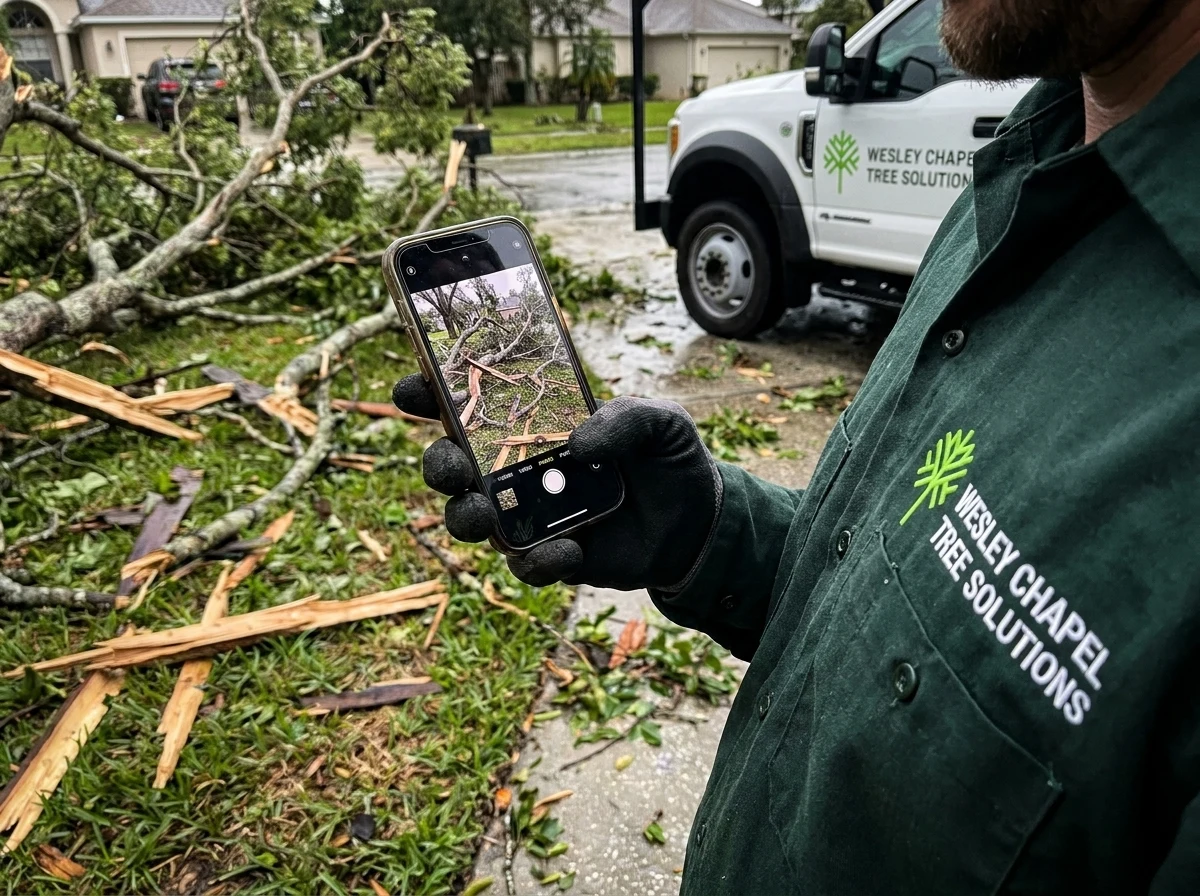
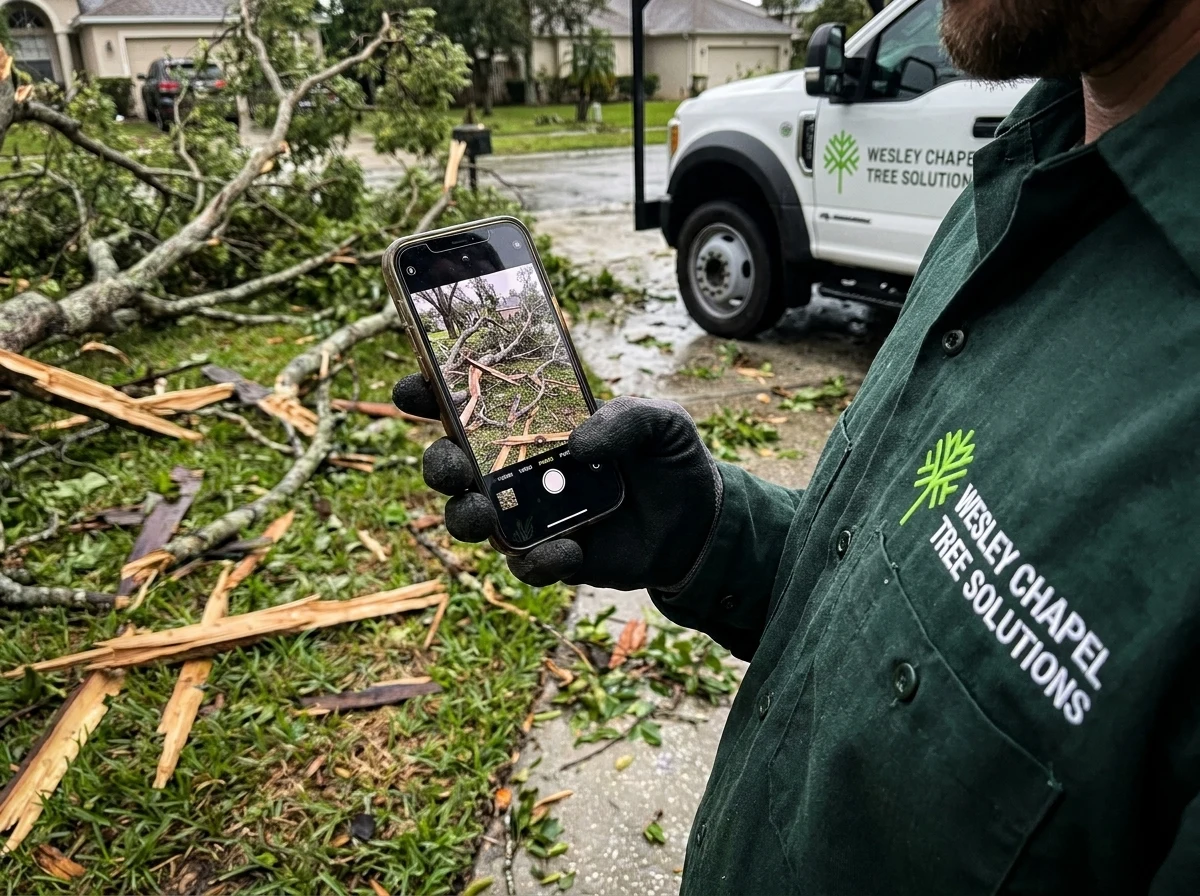
This is the step people skip and regret. Before anything is moved or cut up, photograph the whole scene — wide shots of the property and the tree, close-ups of any structural damage, and the point of impact if the tree hit something. See our full storm damage tree removal page for what we document on every storm call and why it matters for your insurance claim.
Priority scheduling, honestly explained
After a named storm, response times stretch across the board and we triage by severity rather than call order — a tree on a roof gets seen before scattered yard debris regardless of who called first. Calling early gets you into the queue at the right position even if the actual work happens a few days later.