
Not every declining tree is an emergency, and not every ugly tree is actually unhealthy. The goal here is helping you tell the difference, since the wrong call in either direction costs you — either an unnecessary removal on a tree with years left, or ignoring a genuine hazard until it fails on its own schedule instead of yours.
Eight signs worth taking seriously
1. Fungus or mushrooms growing at the base
Shelf-like fungus (conks) or mushrooms at the trunk base are one of the more reliable signs of internal decay, since they indicate the fungus is already breaking down wood inside the tree. This doesn't always mean immediate failure, but it does mean the tree needs a professional assessment of how much sound wood remains.
2. A sudden or new lean
A tree that has always grown at an angle is different from one that has recently started leaning further, especially if you notice soil cracking or lifting on one side of the base. New lean is one of the more urgent signs on this list — it often means the root plate is failing.
3. Large dead limbs in the upper canopy
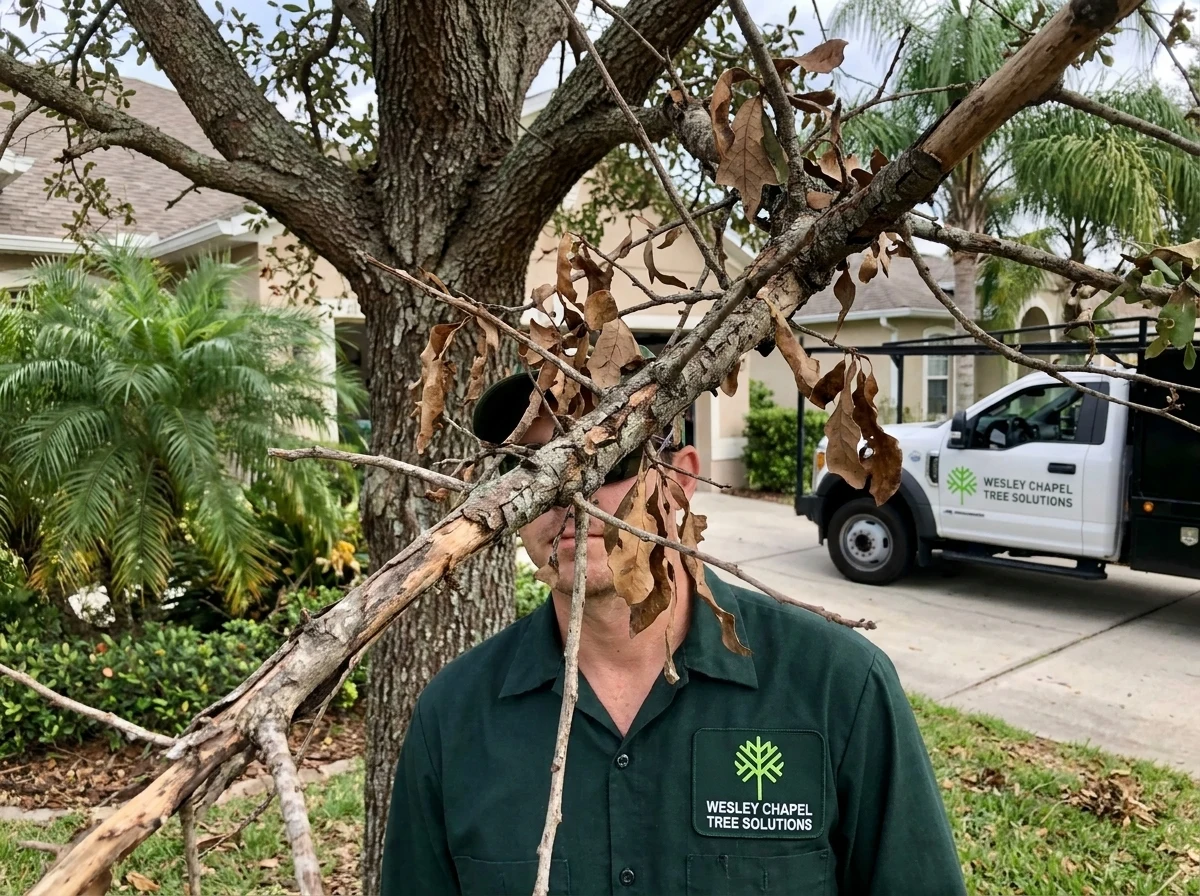
A few small dead twigs are normal seasonal shedding. Large dead limbs, especially multiple ones concentrated in the upper canopy, suggest the tree is struggling to support its full canopy and is beginning to shed the parts it can't sustain.
4. Cracks running down the trunk
A visible crack running vertically along the trunk, particularly one that seems to be opening rather than an old healed wound, indicates a structural failure point that can progress, especially under wind load.
5. A hollow sound when tapped
Tapping the trunk with a mallet or the back of an axe and listening for a hollow, drum-like sound versus a solid thud is a rough but useful field test for internal decay. It's not definitive on its own, but combined with other signs it's worth flagging to whoever assesses the tree.
6. Thinning, undersized, or discolored canopy
A canopy that's noticeably thinner than a similar tree nearby, with smaller-than-normal leaves or unusual discoloration through the growing season, often signals root stress, disease, or a declining vascular system — even when nothing looks dramatically wrong at first glance.
7. Root damage from construction or grade changes
If a tree has had significant root disturbance nearby — trenching for utilities, grade changes, heavy equipment compacting soil in the root zone during nearby construction — it can take one to several years for the resulting stress to show up in the canopy. This is worth watching if your property has had recent site work.
8. Bark that's peeling, cracked, or missing in patches
Healthy bark is intact and firmly attached. Bark that's sloughing off, cracked in a vertical pattern, or missing in patches exposing dead wood underneath is a sign the tree is losing the ability to transport water and nutrients through that section.
What to do next
If you've spotted one or two of these signs and the tree isn't near a structure, it's usually fine to schedule a routine trimming and assessment visit rather than treating it as urgent. If you're seeing several signs together, especially a new lean or large dead limbs over something you care about, call sooner rather than later — see our tree removal page for what a removal actually costs once it's the right call.
When it's a genuine emergency
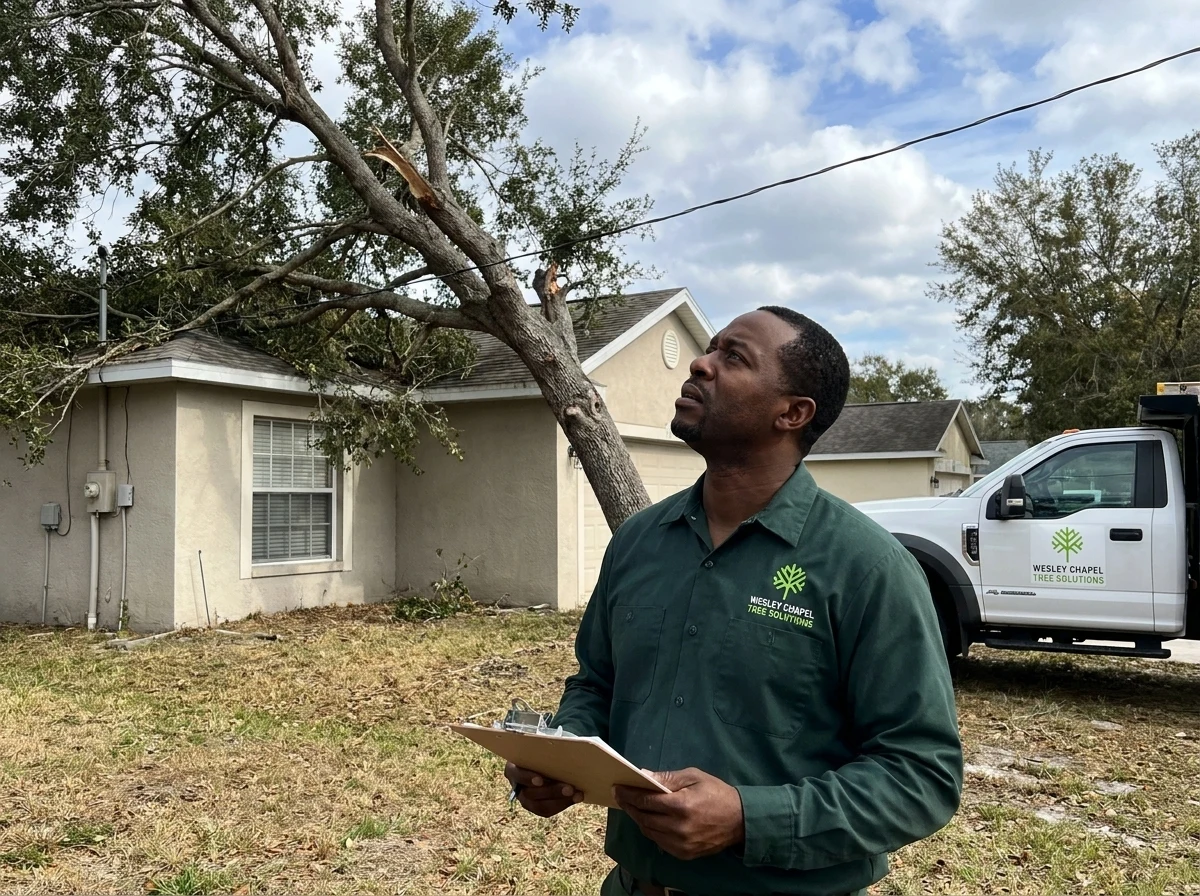
A sudden new lean toward a structure, a trunk that's visibly cracked and appears to be actively opening, or any tree that's already partially fallen or resting on something is not a wait-and-see situation. Call our emergency tree removal line, which runs 24/7 for exactly this kind of hazard.